By Anouk Delacroix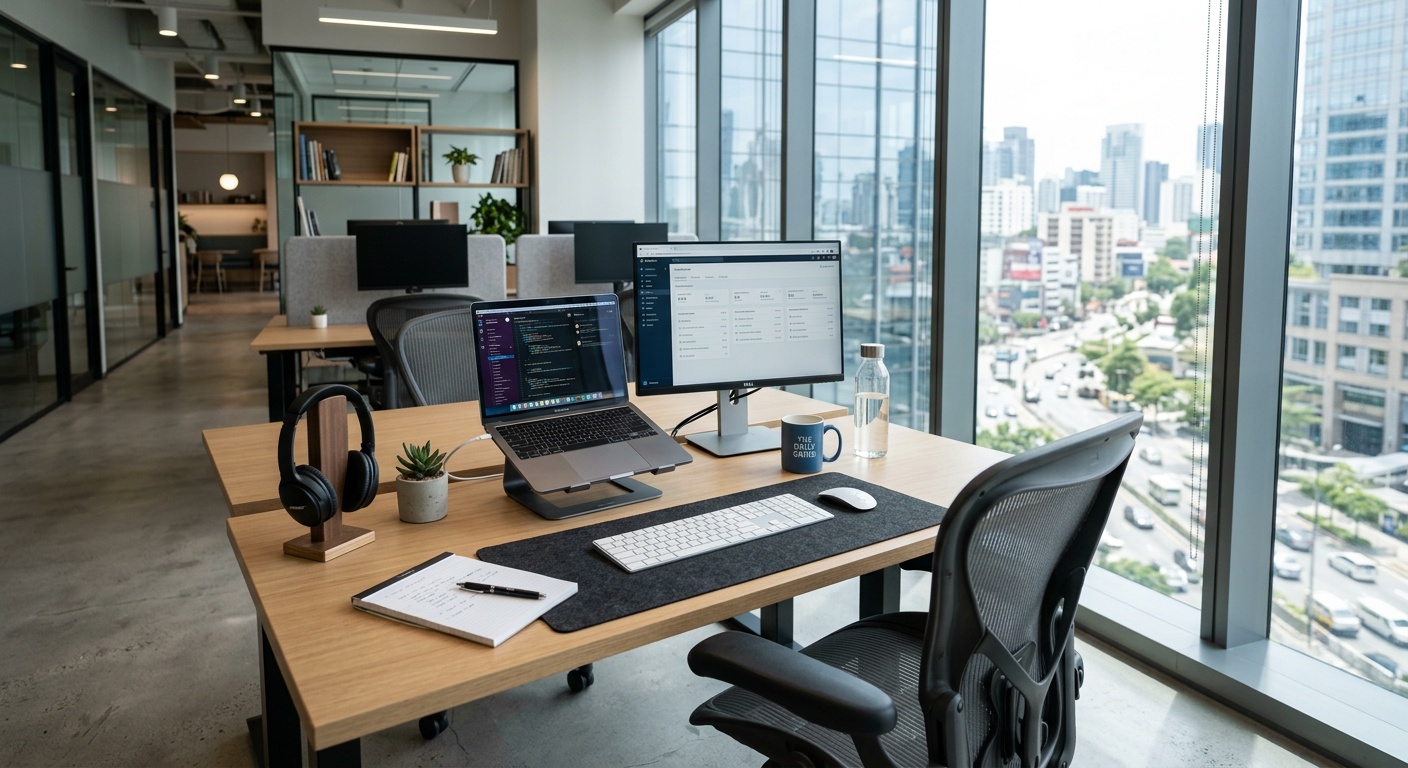
Commercial Interior Styling Trends That Boost Workplace Productivity in 2026
Reading time: 9 minutes
Ever walked into an office and felt your energy drain before you even sat down? That’s not a coincidence—it’s design. As we move deeper into 2026, companies are finally treating interior styling as a productivity lever, not just an aesthetic afterthought. Let’s unpack what’s actually working.
Table of Contents
- Why Workplace Design Is a Business Metric Now
- Top Styling Trends Driving Output This Year
- Biophilic Design and Cognitive Performance
- Acoustic Zoning: The Silent Productivity Killer
- Trend Comparison Table
- Common Challenges and How to Solve Them
- Frequently Asked Questions
- Your Roadmap Forward
Why Workplace Design Is a Business Metric Now
Here’s the straight talk: interior styling stopped being decorative years ago. In 2026, it’s a quantifiable line item tied to retention, focus, and output. A recent Gensler Workplace Survey found that employees in “high-performing” designed offices reported 27% higher productivity scores than those in generic, poorly zoned spaces. Meanwhile, Gallup’s latest engagement data shows disengaged employees cost U.S. businesses roughly $1.9 trillion annually in lost productivity—and physical environment is consistently cited as a top-five contributing factor.
Quick Scenario: Imagine two identical marketing teams, same headcount, same software stack. Team A works in a beige, fluorescent-lit box with fixed cubicles. Team B works in a space with adjustable lighting, sound-dampened pods, and greenery. Which team hits deadlines with less burnout? The answer isn’t theoretical anymore—it’s measurable in absenteeism rates and project turnaround times.
Top Styling Trends Driving Output This Year
1. Adaptive Multi-Zone Layouts
Rigid floor plans are out. In 2026, the leading commercial interiors use modular zoning—quiet pods, collaboration lounges, and “sprint rooms” that can be reconfigured within hours. Steelcase’s 2025 global insights report noted that 68% of organizations redesigning offices this year prioritized flexible zoning over fixed desk assignments, a jump from 52% just two years earlier.
2. Warm Minimalism Over Sterile Corporate Style
Cold glass-and-chrome interiors are giving way to warm minimalism: matte finishes, natural wood tones, and tactile textiles. It sounds like a small shift, but color psychology research from the University of Texas confirms that warm neutral palettes reduce visual fatigue during long screen-based tasks by measurable margins compared to stark white or cool gray environments.
3. Circadian Lighting Systems
Smart lighting that mimics natural daylight cycles is now standard in premium fit-outs. These systems shift color temperature throughout the day—cooler, brighter tones in the morning to sharpen alertness, warmer tones by late afternoon to ease strain. Companies like WeWork and Knotel-successor flexspace operators have baked circadian lighting into their 2026 build standards.
Case Study: A Mid-Size Fintech Firm in Austin
A 140-person fintech company relocated in early 2026 and redesigned its floor with circadian lighting, acoustic pods, and a biophilic atrium. Six months post-move, internal HR metrics showed a 19% drop in reported afternoon fatigue and a 14% reduction in voluntary attrition. The CFO called it “the best-performing capital expense we made all year”—not because it looked good, but because retention costs dropped.
Biophilic Design and Cognitive Performance
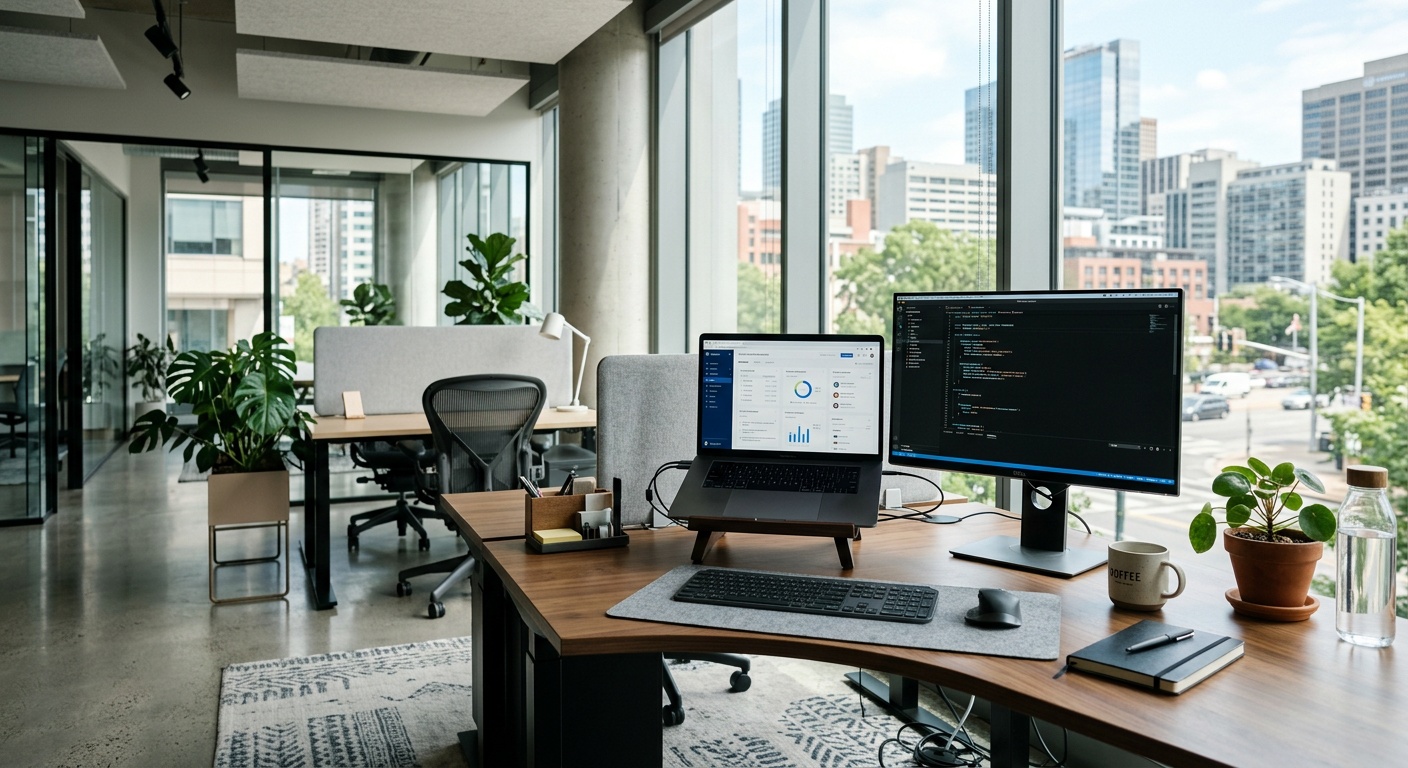
Biophilic design—incorporating plants, natural light, water features, and organic materials—isn’t a wellness buzzword anymore. A frequently cited Human Spaces study found employees in biophilic offices reported 15% higher wellbeing scores and 6% higher productivity scores compared to those without natural elements. In 2026, expect to see more living walls, operable windows, and even indoor micro-gardens integrated directly into workstations rather than treated as lobby decoration.
Pro Tip: You don’t need a full green wall to see benefits. Even desk-level plants and increased window access correlate with shorter recovery time after intense focus periods, according to workplace psychologists studying attention restoration theory.
Acoustic Zoning: The Silent Productivity Killer
Open-plan offices promised collaboration but often delivered chaos. Noise remains the number-one workplace complaint in nearly every commercial real estate satisfaction survey published in the last three years. The fix in 2026 isn’t reverting to cubicles—it’s acoustic zoning: sound-absorbing ceiling baffles, felt partition walls, and dedicated “focus rooms” positioned away from high-traffic zones.
Practical Roadmap for Acoustic Improvement
- Audit current noise hotspots using a decibel meter app over one workweek.
- Introduce soft materials—rugs, acoustic panels, upholstered furniture—in high-traffic zones first.
- Designate at least one quiet room per 15-20 employees.
- Reassess after 60 days using employee pulse surveys.
Trend Comparison Table
| Design Trend | Avg. Implementation Cost | Reported Productivity Lift | Employee Satisfaction Impact |
|---|---|---|---|
| Circadian Lighting | Medium-High | 10-14% | High |
| Biophilic Elements | Low-Medium | 6-15% | Very High |
| Acoustic Zoning | Medium | 8-12% | High |
| Modular Zoning | High | 12-18% | Medium-High |
| Warm Minimalist Palette | Low | 4-7% | Medium |
Visualizing the Productivity Lift
Common Challenges and How to Solve Them
Challenge 1: Budget Constraints
Not every business can afford a full redesign. Solution: phase implementation. Start with low-cost, high-impact changes—plants, warm lighting bulbs, rearranged furniture for zoning—before committing to structural acoustic work or smart lighting infrastructure.
Challenge 2: Resistance to Change
Employees accustomed to assigned desks often resist flexible layouts. Solution: pilot the change with one floor or department for 90 days, gather feedback, and iterate before a full rollout. Transparency about the “why” behind the redesign reduces pushback significantly.
Challenge 3: Measuring ROI
Design ROI is harder to quantify than software ROI. Solution: track proxy metrics—absenteeism, meeting room utilization, employee pulse survey scores, and attrition—before and after implementation, over a minimum six-month window.
Frequently Asked Questions
Does open-plan office design still work in 2026?
Open-plan layouts work best when paired with acoustic zoning and dedicated quiet spaces. Pure open-plan without noise control tends to hurt deep-focus work, so the trend now is “hybrid open-plan”—open collaboration zones balanced with enclosed focus rooms.
What’s the fastest, lowest-cost styling change with real impact?
Improving lighting quality and adding greenery are the fastest wins. Swapping harsh fluorescent bulbs for warm, adjustable LED lighting and adding desk plants can be done within days and shows measurable satisfaction improvements within weeks.
How do I know if our office redesign is actually improving productivity?
Track quantifiable proxies: project completion times, meeting efficiency, sick day frequency, and employee engagement survey scores. Compare data from three months before the redesign to three months after for a credible baseline.
Your Roadmap Forward
Workplace design in 2026 isn’t about chasing aesthetics—it’s about engineering environments where people can actually think clearly and work sustainably. Here’s how to move from insight to action:
- Audit first: Spend two weeks observing noise levels, lighting quality, and space usage before spending a single dollar.
- Prioritize biophilic and lighting upgrades: They deliver the highest satisfaction-to-cost ratio.
- Pilot modular zoning in one department before a full office overhaul.
- Measure relentlessly: Treat design changes like any other business investment, with clear before-and-after metrics.
- Revisit quarterly: Workplace needs shift as teams grow and hybrid patterns evolve—design should stay flexible, not fixed.
The broader shift here connects to a larger truth reshaping business in 2026: physical space is becoming as strategic as digital infrastructure. So, what’s the one change your office could make this month that would actually move the needle—not just make the space look nicer, but make your team think sharper and work better?